· 7 min read
Chair Yoga for Elderly: A Practical Guide
A practical guide to chair yoga for elderly beginners, covering a stable setup, a simple session map, and safety notes drawn from official NIH NCCIH guidance.
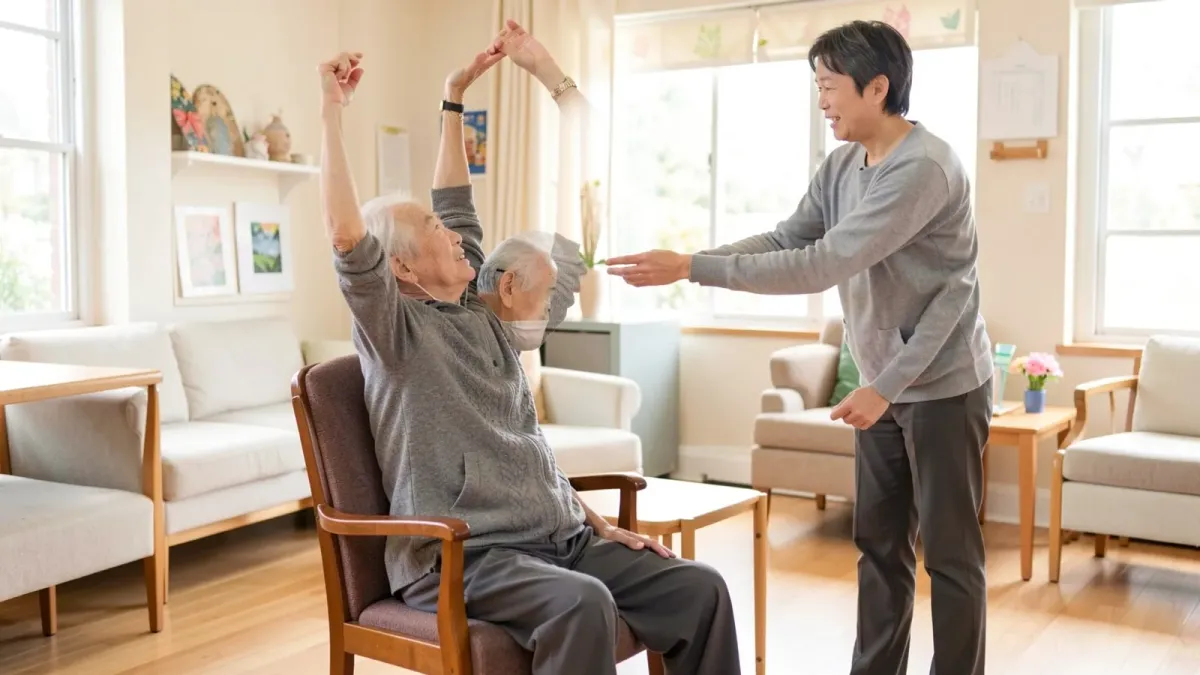
Make the chair boring and stable first
Chair yoga for elderly beginners goes better when the furniture is dull. The first session we ever set up in a relative's living room used a wheeled desk chair, because it was the one that looked “comfortable.” It rolled backward during a simple arm reach. Nobody fell. Everybody learned something. The chair is not a prop to make yoga look softer. It is the thing that keeps you from ending up on the floor before you meant to.
The National Center for Complementary and Integrative Health, part of the National Institutes of Health, describes chair yoga as an even gentler option for older people with limited mobility, and it is blunt about the rest: older adults should put safety first, start with an appropriate class such as gentle yoga or seniors yoga, and talk with both a health care provider and the teacher if there are medical issues. Those points are in NCCIH’s materials on yoga for older adults and its shorter list of things to know about yoga. This guide is a practical setup, not a treatment plan. Yoga should not be used to delay a conversation with a clinician.
What “yoga with a chair” usually means
Chair yoga is not one pose. It usually means you stay seated for most of the session, or you sit and then stand while keeping a hand on the chair. The chair can be a place to rest, a balance aid, or a height to hold. It should not be a test of whether you can get up from a low, soft sofa.
A useful chair is firm, high enough that the feet can rest on the floor (or on a solid stool if the chair is tall), and stable. A dining chair with a back and no wheels is a common, good choice. If the only chair with arms is the one the person can already get in and out of safely, that may be the right chair, even if it looks less like a studio prop. Lock any wheels. Test the chair by sitting down and shifting your weight before you add arm movements. Leave space around it so a walker, a cane, or another person can sit nearby without becoming a trip.
Clothes should let you breathe and see your feet. Bare feet can be fine on a non-slip floor; socks on a polished floor are a bad combination. If someone already uses a hearing aid, glasses, or a monitor, keep those as they usually are, unless a clinician has said otherwise. Have water in reach, and have a way to stop that does not require a dramatic announcement. Stopping is part of the practice.
A session map you can take to a class, or use after one
NCCIH notes that learning yoga on your own, without supervision, has been associated with increased risk of injury, and that the rate of yoga-related injuries is higher among people 65 and older than among younger adults. That is why the first “program” should preferably be a class, or a few sessions with a teacher who has already watched this person stand up and sit down. The table below is a map of common building blocks, not a prescription and not a promise of a particular health result.
| Part of a session | What it is for | A conservative way it may look | Stop or change if |
|---|---|---|---|
| Arrival and sitting | Finding a steady seat before any movement | Sit toward the front of a firm chair, feet on the floor, hands on the thighs, take a moment to notice the breath | The chair rocks, the feet dangle without support, or sitting itself is painful in a new way |
| Easy breath awareness | Settling, not “deep breathing” as a contest | Breathe in an ordinary, comfortable way; let the shoulders drop if they are up around the ears | Dizziness, chest pain, or a feeling that you must force a bigger breath |
| Hands, shoulders, neck | Loosening places that stiffen from sitting | Slow shoulder rolls, opening and closing the hands, turning the head only as far as is easy | Sharp pain, numbness, or the need to crank the neck to the limit |
| Seated marching or ankle work | Waking the legs without leaving the chair | Alternate heel lifts or a small march, at a pace you can talk through | Hip or knee pain that worsens, or feet that swell or go cold in an unusual way |
| Supported reach or a gentle twist | Moving the torso in a small, controlled range | A reach forward or up that does not lift the sit bones; a small turn from the mid-back, one hand on the chair | You have to hold your breath, or the chair starts to tip |
| Optional stand with a hold | Practice standing with the chair still there | Hold the back of the chair, stand up the way you already know is safe, then sit down again | The room spins, the knees buckle, or you need to pull on the chair to rise |
| Rest | Ending without a rush | Sit quietly, or rest the forehead on stacked hands on a table if that is already comfortable | You feel worse than when you began and it is not settling |
Chair yoga poses for elderly beginners should be smaller than the pictures. If a picture shows a person folded in half beside a chair, that is not a homework assignment. A teacher can help you modify. If you cannot do a movement, that is information, not a failure.
How to find help that is actually help
A community class labeled “chair yoga,” “gentle yoga,” or “yoga for seniors” is the usual starting point. Call or visit first. Ask whether people stay seated, whether the teacher has worked with students who use a cane or a walker, and whether you can watch a class before joining. Tell the teacher about replacements, recent surgeries, dizziness, and anything your clinician asked you to avoid. A good teacher wants that information before the first reach.
If transport or stamina makes a class hard, a video or a printed sheet can be a memory aid after a teacher has already set the shape of the movements. It is a weaker first teacher. NCCIH’s safety advice is to start slowly, choose a class at the right level, and not push past comfort. A free video cannot see that you are holding your breath or that the chair is sliding.
A family member can sit nearby, not to count repetitions, but to hand a cane, move a water glass, or help if someone feels faint. They should not press a limb farther than it wants to go.
A checklist before the first session
- A clinician has been told about this plan if there is a medical condition, a recent injury, or frequent dizziness
- The chair is firm, stable, and, if it has wheels, locked
- Feet can rest on the floor or on a solid support
- The floor is not slippery, and the space around the chair is clear
- You know how to stop, sit, and rest
- A teacher, or at least a first supervised session, is part of the plan
- You will not use this practice to put off medical care
Questions people ask after the wheeled-chair story
Is chair yoga only for people who cannot stand?
No. It is often a good starting place for people who can stand but prefer a supported, slower session, and for days when standing practice is not wise. The chair is a tool. It is not a verdict on anyone’s ability.
How long should a first session last?
Short enough that the person still feels steady at the end. A class will usually have a set length; at home, a few well-chosen movements and a rest are enough on the first day. Adding time is easier than recovering from a session that went on out of pride.
Can chair yoga fix balance, pain, or stiffness?
It may be a gentle way to move, and NCCIH notes that research on yoga in older adults has looked at things like flexibility, strength, and balance, with mixed or modest findings depending on the question. It is not a cure, and it is not a reason to stop treatment a clinician has already recommended. Judge a session by whether it felt safe and doable, not by a promise in a caption.
What if getting in and out of the chair is already the hard part?
Then that is the movement to work on with a professional who already knows this person, such as a clinician or a therapist, before you add a yoga sequence. Chair yoga assumes a seat you can use safely. If that is not true yet, start there, not with a video.
Tags: #chair yoga#older adults#beginners#mobility#home practice