· 6 min read
Children's Yoga Pose: What to Look For Before You Buy
How to choose children's yoga poses, classes, and pose cards safely, with a buying-style selection table and official NIH NCCIH notes on children's yoga.
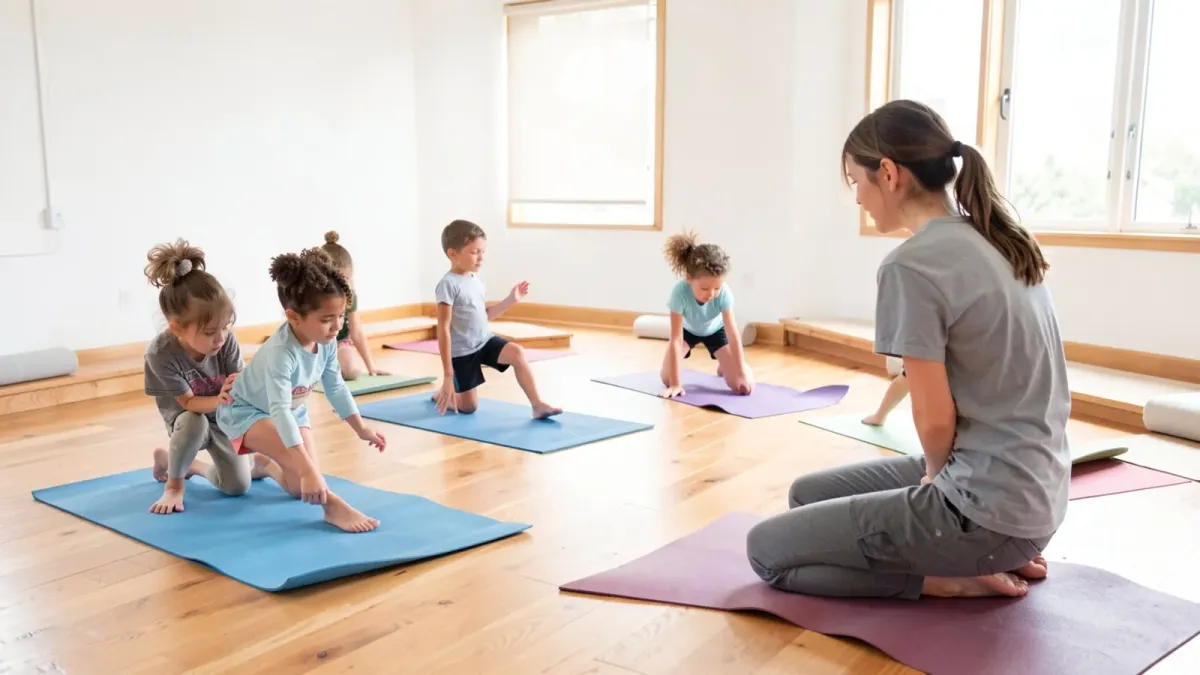
You are choosing a way of moving, not a toy with a winner
“Children’s yoga pose” sounds, in a shopping search, like something you can add to a basket. The title of this piece follows that habit; the useful decision is slightly different. Before you buy a deck of pose cards, a kit, or a course of classes, decide whether the poses themselves are age-appropriate, whether an adult will be involved, and whether the resource treats yoga as play and practice rather than as a flexibility contest or a therapy you can order online.
The National Center for Complementary and Integrative Health, part of NIH, says yoga may have benefits for children, with preliminary evidence that it may help reduce anxiety and depression in children and teens, and that it may be helpful for weight loss in some children and teens with overweight or obesity. That is preliminary, not a promise, and it is not a reason to use yoga in place of care from a clinician. NCCIH also reminds adults that yoga is generally safer when practiced with a qualified instructor, and that learning without supervision has been associated with increased risk. The official short list is here: 5 things you should know about yoga. For a child’s medical or developmental questions, talk with the child’s health care provider first.
What a good children’s pose looks like in practice
A good children’s yoga pose is easy to recognize, easy to leave, and short enough for the child’s attention. Animal shapes, simple seated positions, a stretch a child can pretend their way into, and a rest at the end are the usual building blocks. The pose should not require a child to be placed, pushed, or sat on by an adult or by another child. It should not be a headstand or a deep backbend demonstrated as a party trick. If a card or a video only looks impressive when an adult arranges the child’s limbs, it is the wrong resource.
Sessions should be brief and closer to play than to a studio flow. A preschooler may last a few poses and a song. An older child may want a slightly longer, still playful, sequence. Either way, the child can say no, and the pose ends. Breathing cues, if you use them, should stay ordinary: a gentle blow, a quiet count, not a demand to “take a huge breath and hold it.”
If you are buying something, you are usually buying a reminder: cards, a simply illustrated book, or a class pack. The purchase will not do the watching for you.
A selection table for classes, cards, and books
Use this when you are standing in a shop, clicking through a listing, or talking to a teacher. It is a criteria table, not a review of named brands.
| What you are choosing | A good sign | A weak sign | What to do instead of buying badly |
|---|---|---|---|
| A class | The teacher is used to this age group; the room is safe; parents know whether they stay; poses are optional and playful | A “family yoga” hour that is really an adult flow with children expected to copy, or a class that promises to treat a medical condition | Ask to watch a session; talk with the child’s clinician if you were hoping yoga would “fix” something |
| Pose cards or a poster | Clear pictures of simple shapes; a rest pose included; language a child can hear without being corrected every second | Tiny photographs of advanced poses, or instructions that say to press a child into a stretch | Choose a smaller set of easy poses, or draw your own on index cards with the child |
| A book or a story-based practice | A short sequence, a story or a game, and an obvious way to stop | A thick syllabus that looks like teacher training, sold as a children’s kit | Borrow one from a library first, if you can, and try two pages, not the whole book |
| A mat or a prop | A mat that will not slide too much, in a length the child can use; props that are optional | A prop the practice depends on, especially anything that goes around the neck, or a slick “play” mat on a polished floor | Practice on a carpet or a towel you already have, and see if the child even wants a mat |
| A video | A teacher you would trust in a room; short chapters; encouragement to pause | Fast, advanced shapes, or a challenge to “keep up” | Watch the first five minutes yourself before the child does, and sit with them if you play it at all |
If a product is being sold mainly as a treatment for attention, sleep, or behavior, step back. A class may still be a pleasant activity. It is not a substitute for advice from the people who already care for the child’s health.
How to try poses at home without turning them into a drill
Sit on the floor with the child, not on a sofa above them. Pick two or three shapes. Do them together, badly if necessary. Name them in a way the child enjoys. Rest. If the child runs off, the session is over, and that can still be a success.
Keep the dog, the baby sibling, and the hard furniture out of the way. Do not lift a child into a pose. Do not let children stand on each other’s backs. If you want a two-person moment, sit back to back and breathe, or copy each other at a distance.
A children’s yoga pose should leave the child willing to try again another day. If the hour ends in tears, or in an adult lecture about focus, the resource is too much, or the timing is wrong. Try after a snack, not when everyone is already exhausted, and keep it shorter than you think.
A checklist before you spend money
- I know this is play and practice, not a medical treatment
- The poses are simple, and the child can come out of them alone
- An adult will be present, especially the first times
- The class or the cards do not rely on pushing, lifting, or advanced balances
- I can try or watch before I buy a long course, when that is possible
- The child’s clinician has been consulted if we have a health question
- I will stop when the child has had enough
Questions parents ask in the shop aisle
How young is too young for yoga poses?
There is no single official birthday that turns a child into a yoga student. Younger children need shorter, more playful sessions and closer watching. If a class is offered for an age, ask what actually happens in the room, and whether parents stay. A very young child may be happier copying two shapes on the living-room floor than joining a formal group.
Do we need a special children’s mat or a kit?
No. A towel, a rug, and comfortable clothes are enough to find out whether the child likes this at all. Buy a mat later if you are going to a class that expects one, or if the floor is uncomfortable. Kits are optional reminders, not equipment you must have.
Can yoga replace physical therapy or counseling?
No. NCCIH’s notes about possible benefits in children are not a license to postpone care. If a child is already working with a clinician or a therapist, ask those professionals whether a yoga class would sit comfortably beside that work.
What if my child only wants the animal names and not the “still” part?
Start with the animals, and keep the still part short, or skip it. A rest of ten seconds with a blanket is still a rest. You can offer more stillness later if the child is interested. Forcing a meditation on a preschooler is a good way to end the whole experiment.